In detail
Heating and bathroom work in Hambleton, explained
Hambleton's mix of rural cottages, village semis and newer estate housing each bring their own quirks. Here's what actually shapes the work we do here.
- Gas Safe 970769
- Registered engineer
- 24 months
- Workmanship guarantee
- £80
- Diagnostic, credited back
- 24/7
- Phones answered
01
A village shaped by farmland and the River Wyre
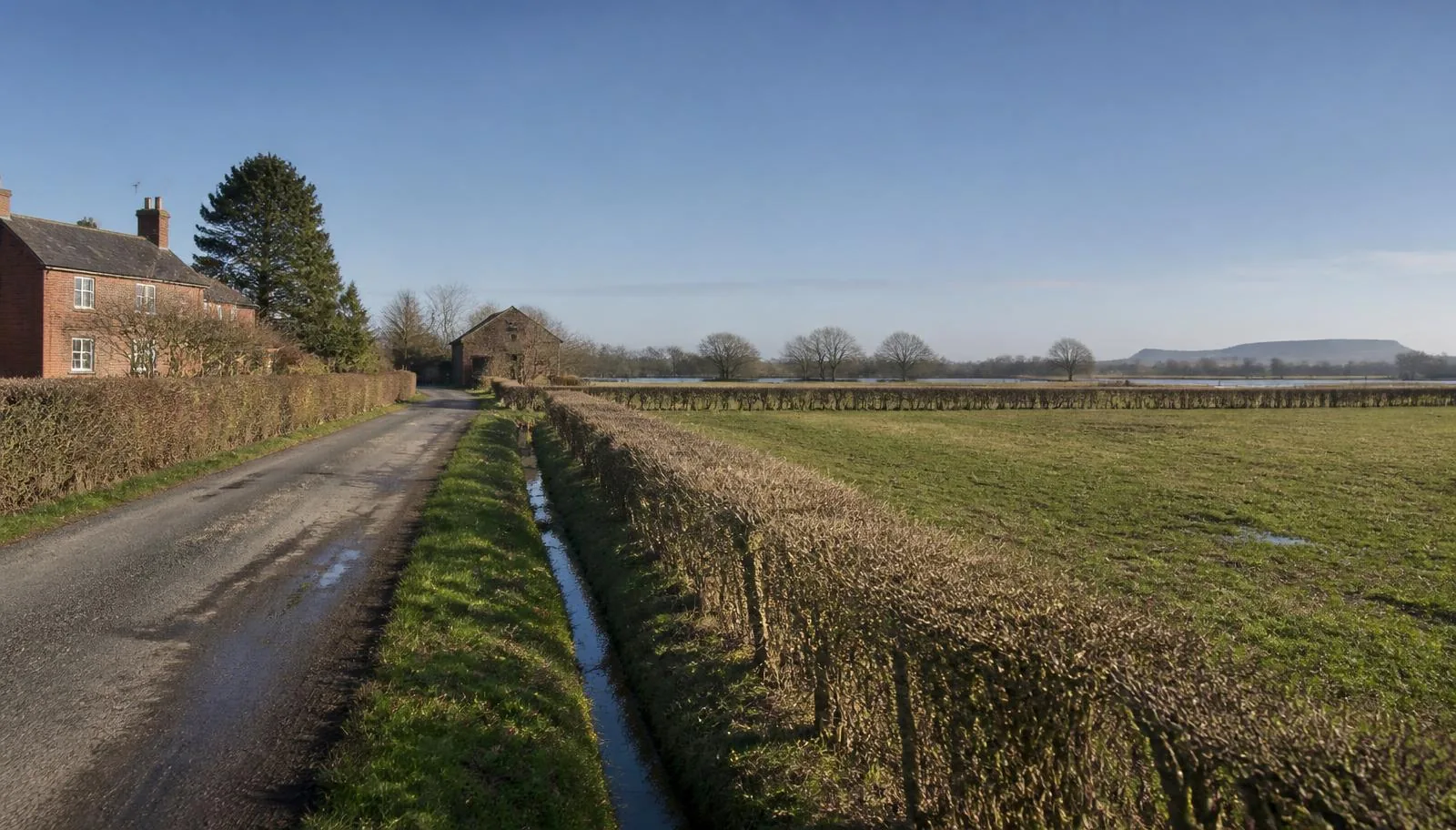
Hambleton sits in the flat, open landscape of Over Wyre, with the village itself clustered around Fleetwood Road and the church, and the land beyond running out towards the River Wyre and the estuary. That geography matters for the trade we do here: properties are more spread out than in Blackpool or Cleveleys, distances between the water main and the house can be longer, and exposure to weather coming off the estuary is a genuine factor in how pipework and flues hold up over time.
The housing itself reflects that mix. There are older farm cottages and converted outbuildings dotted along the lanes towards the Wyre, a core of the village built up through the 20th century with 1960s, 1970s and 1980s semis and detached houses, and more recent infill development off roads like Docker Lane bringing smaller estates of newer-build homes. Each of those property types comes with a different set of heating and plumbing considerations, and we plan every job around the specific one in front of us rather than a generic approach.
02
Older cottages and converted farm buildings
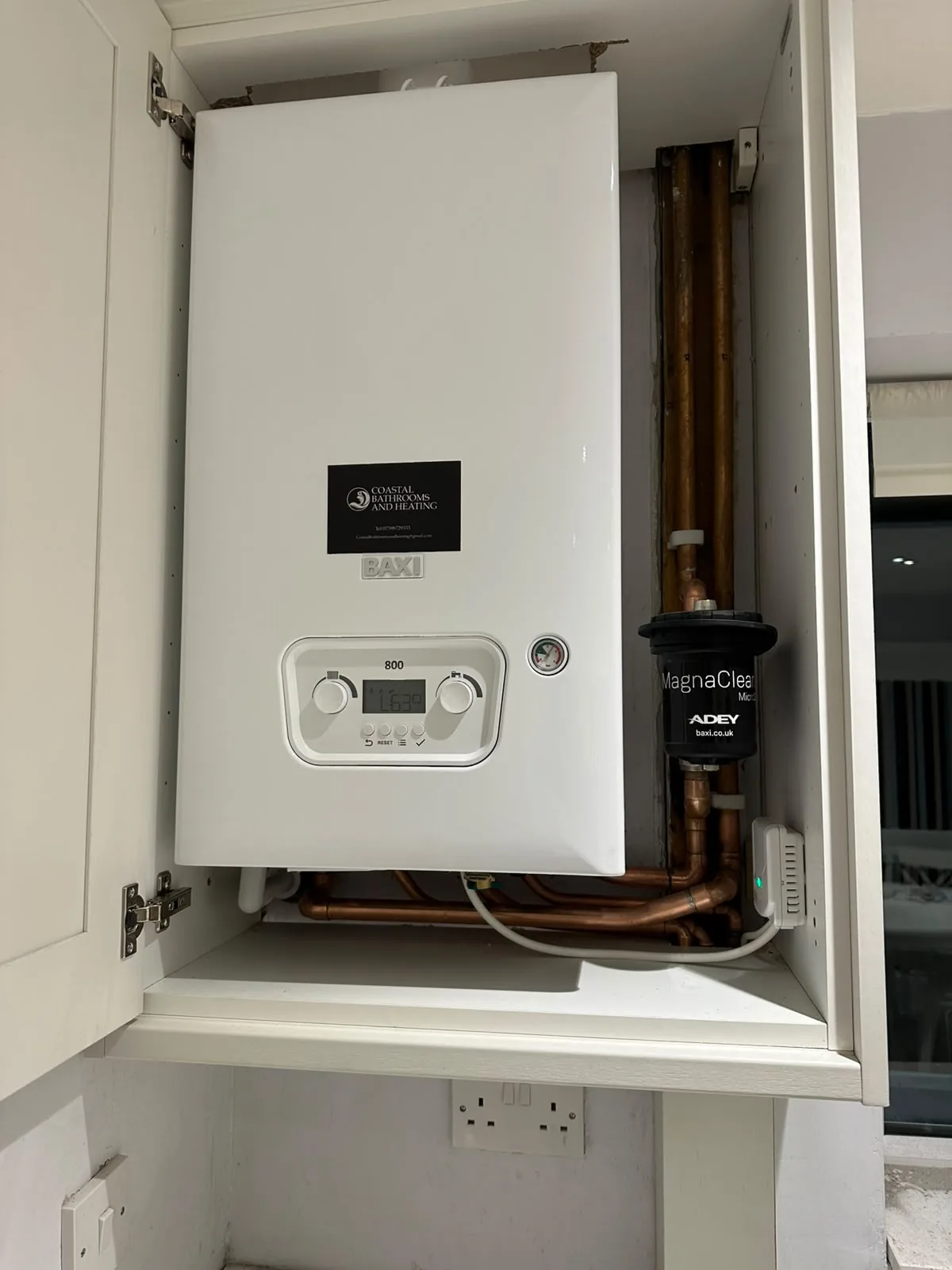
The older cottages and converted outbuildings around Hambleton often have boilers tucked into former pantries, utility rooms or lean-tos added at some point over the decades, with pipework routed to suit whatever layout made sense at the time rather than modern best practice. Getting a new boiler into these properties sometimes means rerouting pipework or repositioning the flue to meet current clearances, which we plan for at survey stage rather than discovering on the day.
Some of these properties still run older gravity-fed heating systems, where hot water is stored in a cylinder fed by gravity from a loft tank rather than a modern sealed and pumped arrangement. Converting to a sealed system usually improves pressure and reliability significantly, and it's a conversation we regularly have with owners of Hambleton's older cottages and farmhouses.
- Boilers positioned in former pantries, utility rooms or converted outbuildings
- Older gravity-fed systems that benefit from conversion to sealed, pumped setups
- Pipework laid decades ago that may need rerouting to meet current flue clearances
03
Exposure to weather off the Wyre estuary
Properties nearer the estuary and the open farmland around Hambleton are more exposed than tighter-packed streets in Blackpool or Poulton-le-Fylde, and that exposure to salt-laden westerly wind and driven rain accelerates corrosion on external pipework, flue terminals and boiler casings that aren't adequately protected. We factor this into flue positioning and pipe protection on installs out here, rather than treating every property the same regardless of how sheltered it is.
Condensate pipes are a particular concern in more exposed rural settings. An externally routed condensate pipe is already a common cause of winter breakdowns on badly installed systems, and that risk is higher on an exposed Hambleton property than a sheltered mid-terrace elsewhere on the Fylde Coast, so we prioritise internal routing wherever the boiler position allows it.
04
Village semis, bungalows and newer estate homes
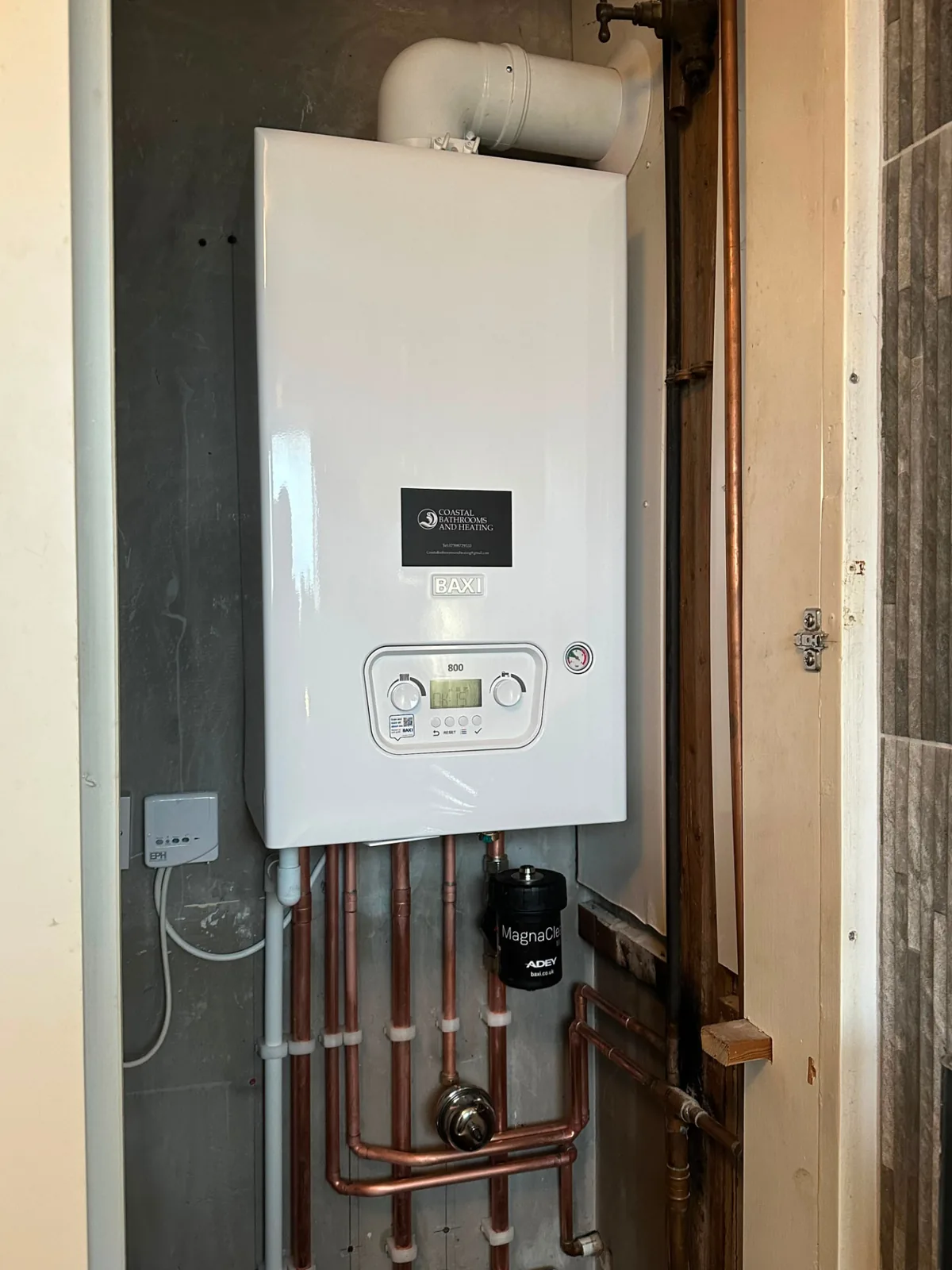
The core of Hambleton village includes plenty of 1960s to 1980s semis and detached houses, along with a good number of bungalows that suit residents wanting step-free living. Combi boilers in these properties are often now well past their efficient years, and we regularly find them oversized or undersized for the household's actual hot water demand, something we correct properly at replacement rather than fitting like-for-like out of convenience.
Bungalows in particular are where we see the most interest in wet room conversions, since a level-access shower suits residents planning to stay in their home long term without the step of a traditional bath or shower tray. Newer estate homes off roads like Docker Lane tend to have straightforward modern pipework, which usually makes boiler and bathroom work more predictable, though we still check sizing and controls rather than assuming a newer property is automatically well set up.
05
Water quality, pipework and long pipe runs
Like the rest of the Fylde Coast, Hambleton sits in a hard water area, and limescale builds up steadily in combi boiler heat exchangers, pipework and shower valves over time. This shows up as reduced flow, noisy heating systems and appliances working harder than they should, particularly in older properties that have never had a filter or scale-reducing device fitted.
Rural plots and farmhouses around Hambleton can also have unusually long pipe runs between the incoming water main and the property, and some older properties still run on undersized 15mm mains laid decades ago. Both factors limit pressure and flow to bathrooms, especially where a household wants a modern shower or wants to run two outlets at once, and we assess this properly at survey stage before recommending a boiler type or bathroom fit-out.
06
Bathroom renovations across Hambleton's housing mix
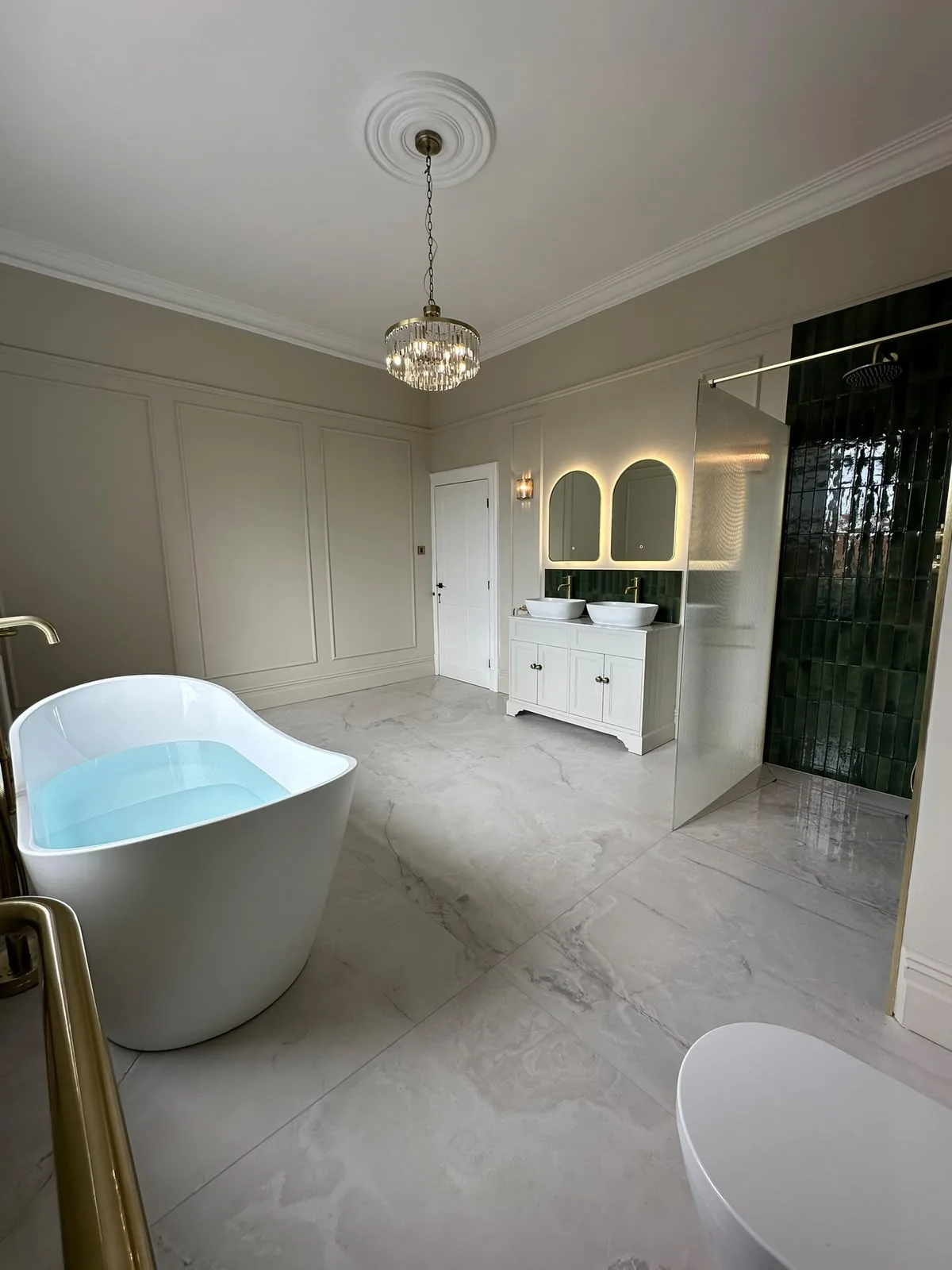
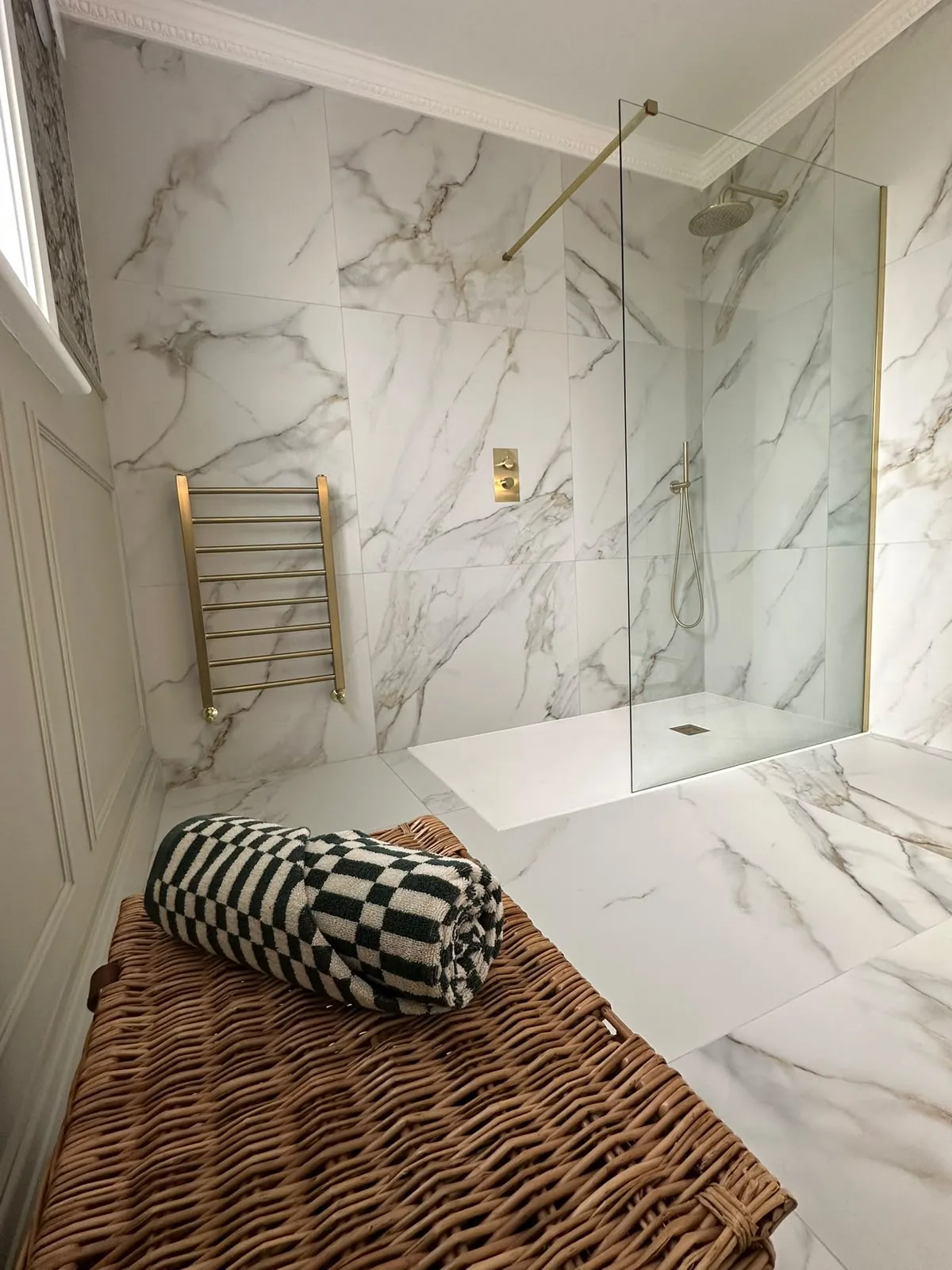
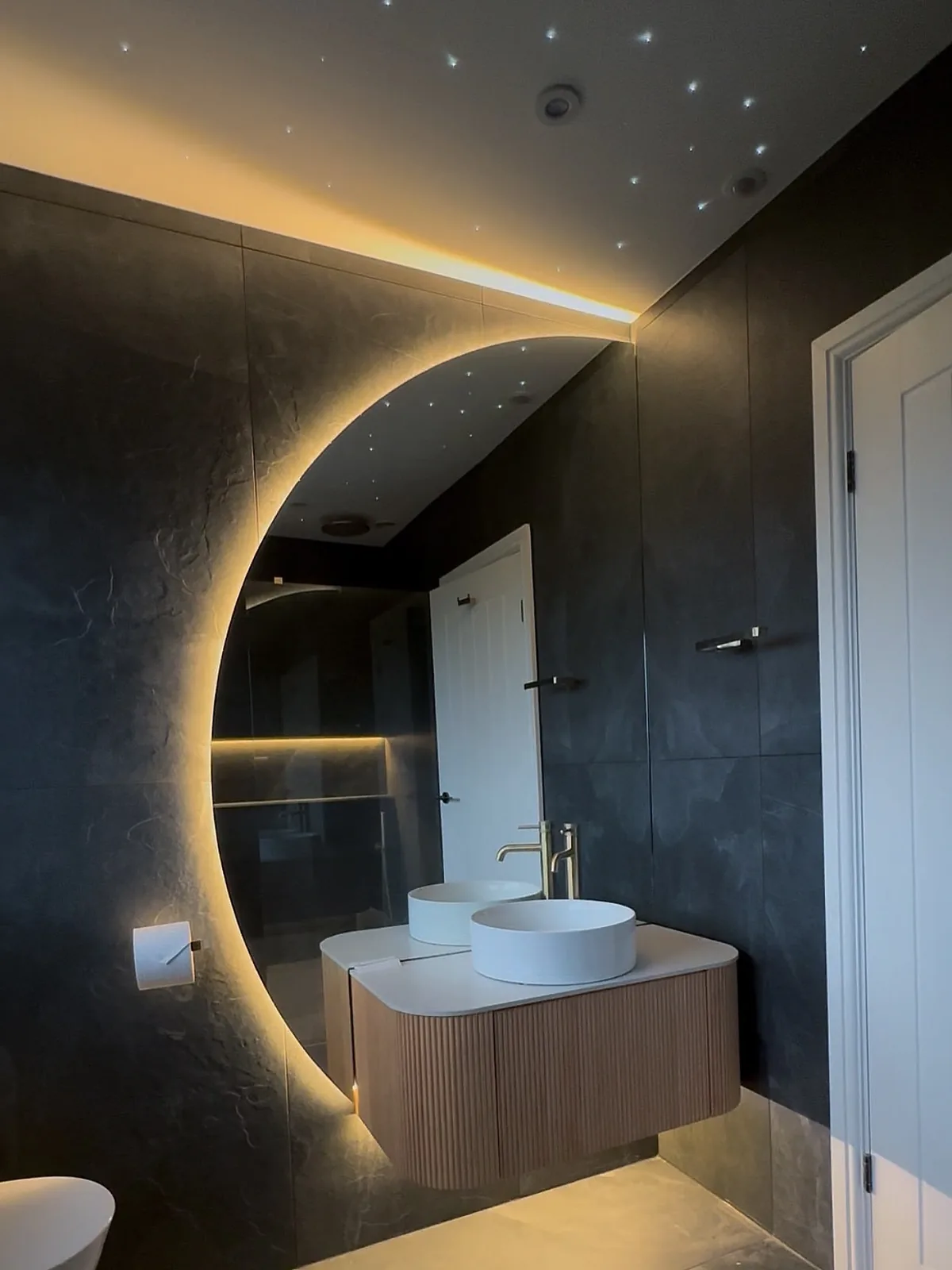
Bathroom work in Hambleton ranges from full renovations in dated village semis to careful retrofits in period cottages where structural quirks and existing pipework routes need working around. Our in-house team covers plumbing, tiling, electrics and plastering, which matters in a rural setting like Hambleton where coordinating multiple separate contractors can add real delay to a project.
Holiday let and rental cottages near the Wyre are another regular feature of the work here, where owners want a bathroom that stands up to frequent changeover use without constant maintenance call-outs. We spec fittings and finishes with that kind of use in mind where it's relevant, rather than assuming every job is for a permanent family home.